
A Calmer Morning Routine for Anxious People
A gentle 30-minute shape for the start of the day, so anxious mornings begin from steady ground instead of a jolt.
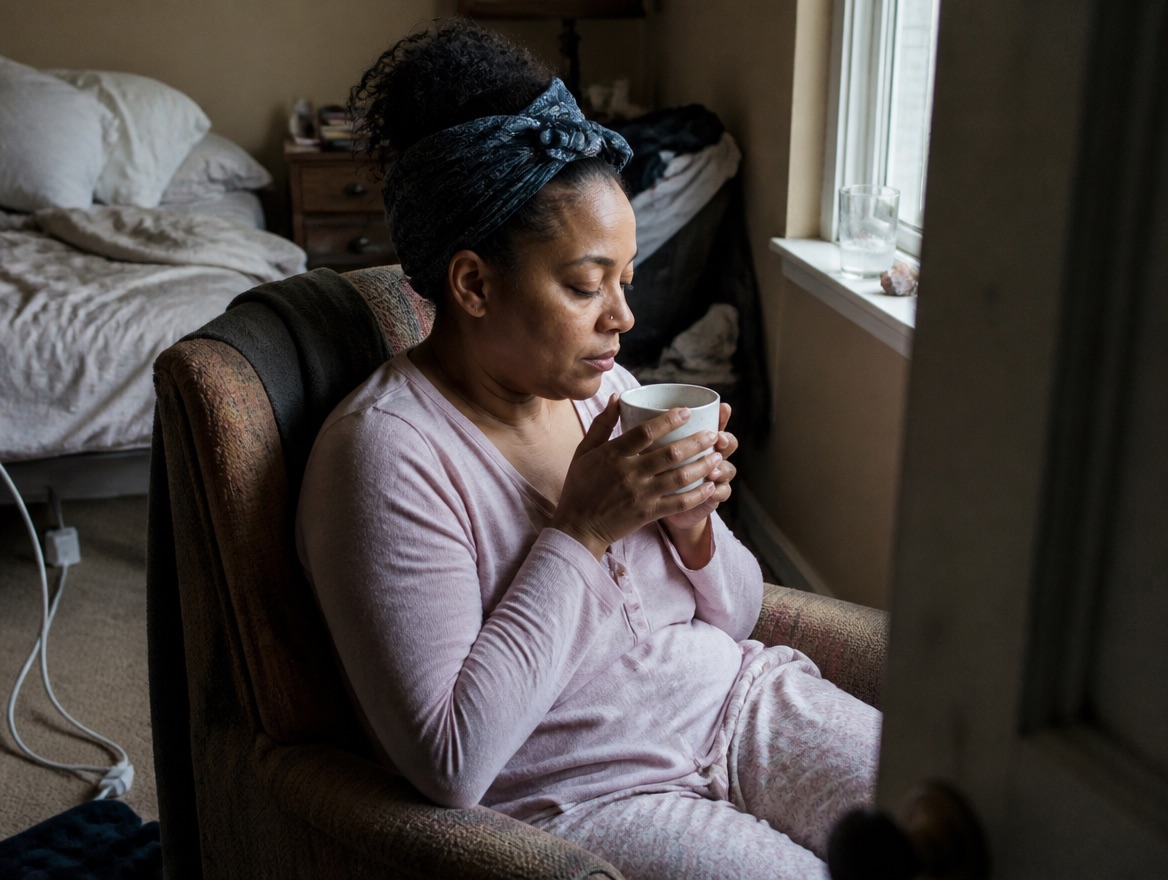
If your mornings tend to start with a jolt — a racing heart before your feet have even hit the floor, a buzzing mind already drafting the day’s worries — you are not imagining it, and you are not doing mornings wrong.
The body has its own rhythm in the first hour of waking. Cortisol, often described as an alertness hormone, tends to rise in the early morning. For many anxious people, that period can feel less like waking up and more like being shoved into the day. It makes sense that mornings would feel hardest exactly then.
You don’t need a new personality or a perfect routine to soften it. A gentle shape for the first thirty minutes — a small, repeatable architecture — can help the day start from steadier ground for many people. None of this is a treatment for an anxiety disorder; it’s simply a kinder way to begin.
Before you check the phone
The first impulse, for most of us, is to reach for the phone. A few minutes of news, a scroll, a glance at the inbox. The trouble is that this lands right on top of the morning cortisol rise, when your nervous system is already a bit on edge. Bright screens, work emails, and headlines are a lot to ask of a body still finding its footing.
You could try, instead, giving the first five or ten minutes to yourself. Not as a discipline. Just as a small buffer. Sit up slowly. Notice the room. Feel the weight of your feet on the floor. You’re not trying to meditate or accomplish anything — you’re letting your body know there’s no emergency yet.
If the phone is your alarm, many people find it helps to charge it across the room, or to switch it to a simple alarm clock. Removing the temptation tends to work better than fighting it.
Light, gently
Once you’re up, light tends to be a gentle thing to offer your nervous system. Morning daylight is widely thought to help anchor the body’s internal clock and support the natural rhythm of alertness through the day and sleepiness at night. Many people find that a few minutes of outdoor light early in the morning feels grounding, though the effect varies from person to person.
You don’t need a special lamp or a strict ten-minute rule. Open a curtain. Step onto a balcony or porch with your robe on. Stand near a bright window while the kettle boils. Even on an overcast day, outdoor light is far stronger than indoor light, and a few minutes counts.
If it suits you, this is also a lovely moment to breathe a little more slowly. Not a technique, just a few unhurried breaths in the daylight. The point is not to do something impressive — it’s to gently tell the body the day has begun.
A small movement
After the light, a little movement helps. Not exercise as discipline, not a workout to tick off, not anything that asks you to push through resistance before you’ve had a glass of water. Just something that says, kindly, I have a body.
That might look like:
- A few slow shoulder rolls and a gentle stretch in the kitchen.
- A short walk around the block, even five minutes.
- A few minutes of easy yoga or simply standing and reaching upward.
- Watering the plants while you move from room to room.
Anxiety often shows up in the body — a tight jaw, a clenched stomach, shallow breath. Gentle movement can give that energy somewhere to go. It also nudges circulation and warms the system, which many people find helps soften the sharpest edge of a jittery, wired feeling. The aim is steadiness, not sweat.
Food before caffeine
Coffee is a great pleasure. For some people, though, drinking it on an empty stomach in a body that’s already running a little hot can tip a slightly anxious morning into a properly jittery one. Caffeine tends to raise heart rate and alertness; on top of an empty stomach in the early morning, that can feel like too much for some.
You don’t have to give up your coffee. Many people find that simply eating something first — even something small — changes how the caffeine lands. A piece of toast with nut butter, a boiled egg, a bowl of yogurt and fruit, a slice of cheese on bread. Something with a little protein and a little carbohydrate, eaten before or alongside the first cup.
Here’s a rough comparison many anxious mornings recognize:
| Order | What people often report |
|---|---|
| Coffee on empty stomach, then food later | Sharper jolt, racier thoughts, sometimes shaky hands, an energy dip later |
| A small breakfast first, then coffee | A steadier lift, a calmer body, energy that tends to last further into the day |
Hydration helps too. A glass of water before the coffee is a small, kind thing to do for a body that’s been asleep for eight hours.
Decide later
The last gentle move is to hold off, for a little while longer, on the parts of the day that demand decisions. The inbox, the news, the group chats, the calendar. Not forever. Just until you’ve had your light, your movement, your food.
Decisions land softer once the body has settled. Emails read less catastrophic. The day’s to-do list feels less like a wall and more like a list. You’ll still get to all of it — only you’ll meet it from a calmer place.
A simple sequence to keep in your head:
- Quiet first.
- Light second.
- Body third.
- Fuel fourth.
- Decisions later.
A calm morning isn’t a perfect morning. It’s one where the first thirty minutes belong to you, not to the day’s noise.
A note worth saying out loud: a gentle morning shape can support the texture and tone of a day, but it is not a treatment for anxiety and not a substitute for clinical care. If anxiety is frequent, intense, or interfering with your sleep, your work, or your relationships, please consider speaking with a doctor or therapist. An anxiety disorder is a medical issue that deserves real, ongoing support — routines can sit alongside that care, not replace it.
The bottom line
Anxious mornings have a real biological undertow, and the first thirty minutes are worth designing with that in mind. Quiet before the phone, a little daylight, a small movement, food before caffeine, and decisions held off for a beat — that’s the whole shape. It won’t make anxiety disappear, and it isn’t meant to. For many people, though, it can help the day start from steadier ground.