
How to Feel Rested When You Can't Sleep More
When the hours in bed aren't negotiable, small daily levers — light, food, movement, micro-rest — can shift how rested you actually feel.
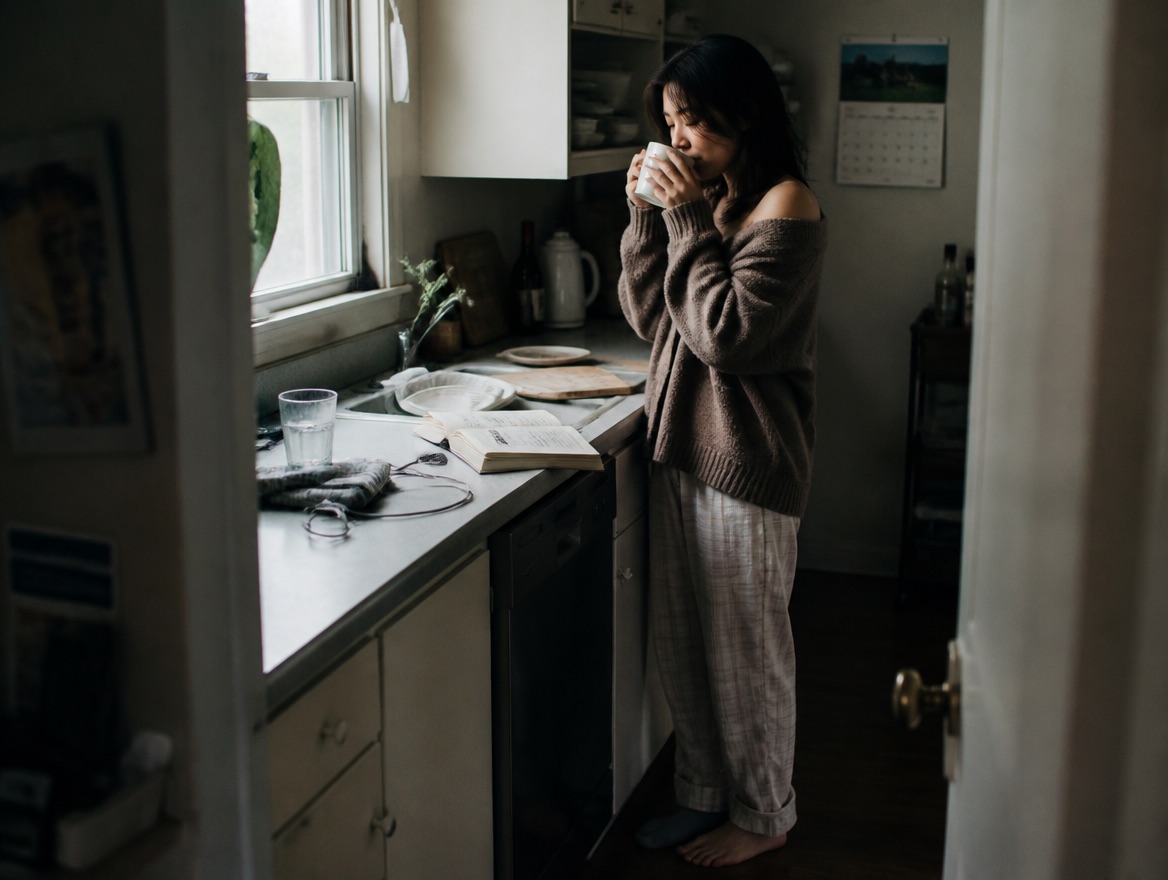
There are stretches of life where more sleep simply isn’t on the table. A new baby, a sick parent, a project that won’t wait, a string of early flights. The advice to “prioritize eight hours” lands strangely in those weeks — true, but useless. The more honest question is what to do inside the hours you already have.
The good news is that how rested we feel and how many hours we slept are not the same number. They’re related, but they pull apart further than most of us realize. Light, food, movement, and small pockets of quiet all nudge that second number in ways worth knowing about.
Start with light, not coffee
The first thing many people reach for on a thin night of sleep is caffeine. It works, in its way. But it tends to work better when it follows light, not when it replaces it.
Morning light is one of the most reliable signals the body has for daytime, awake, alert. Research suggests that getting outside — or near a wide window — within the first hour of waking can sharpen alertness and lift mood across the day, even when sleep the night before was short.
A few gentle ways to fold this in:
- Take your first coffee or tea standing near the brightest window in the house, rather than at the kitchen table.
- If you have a dog or a kettle, use them as an excuse to step outside for two or three minutes. It doesn’t need to be a walk.
- On grey mornings, sit closer to a window than you normally would; even an overcast sky is brighter than indoor lighting by a wide margin.
The point isn’t to perform a morning routine. It’s to tell your body, early, that the day has started — so it stops trying to keep you in the soft drift of last night.
Eat and move in small, steady doses
When sleep is short, the body tends to ask for sugar and a long sit-down. Both make sense, and both tend to backfire by mid-afternoon: a quick lift followed by a heavier slump than you started with.
A steadier shape to the day usually feels better. That doesn’t mean a perfect plate — it means not skipping the small anchors.
- A breakfast with some protein and some carbohydrate — a piece of toast with peanut butter, eggs with fruit, yogurt with oats — tends to hold energy longer than coffee alone.
- Drink water before you decide you’re tired. Mild dehydration looks a lot like fatigue, and the fix takes about a glass.
- Eat something every few hours rather than one big lunch and a long wait. A handful of nuts at three o’clock can rescue a meeting at four.
Movement works the same way: small and frequent beats heroic and rare. A short walk between meetings, a few minutes of stretching after a long sit, the stairs instead of the lift. Many people find that ten minutes of easy movement clears a foggy head better than another cup of coffee — and without the jittery edge that comes later.
On thin-sleep days, be kind about intensity. A hard workout on top of a hard night is sometimes right and sometimes the thing that tips you over. If in doubt, go gentler than usual.
Build in micro-rest
Real rest, on a short-sleep day, often comes in fragments — five minutes here, fifteen there. These small windows do more than they look like they should.
A few that travel well:
- A short lie-down with the eyes closed. Not a nap, necessarily. Even ten or twenty minutes of stillness without a screen can take the edge off the afternoon.
- A walk without your phone. The phone-less part matters; the brain reads scrolling as more input, not less.
- A slow exhale, repeated. A handful of long, slow out-breaths — longer out than in — is one of the simplest ways to dial down the low hum of stress that thin sleep tends to amplify.
- A cup of tea, sat down. Not carried to the desk. Just the act of stopping for the length of a hot drink.
| Micro-rest | Roughly how long | What it tends to do |
|---|---|---|
| Eyes-closed lie-down | 10–20 minutes | Lowers the edge of fatigue without grogginess |
| Phone-free walk | 10–15 minutes | Clears the head, lifts mood |
| Slow breathing | 2–5 minutes | Calms the body’s stress response |
| Sit-down hot drink | 5–10 minutes | A small psychological reset |
None of these replace sleep. They don’t pretend to. What they do is take the worst edge off the day so you arrive at the night with something left over — and, often, fall asleep more easily when you do get the chance.
Protect the night you do have
When sleep is scarce, the temptation is to squeeze the day for every last minute and crash whenever. It’s understandable. But the shape of the evening still matters, maybe more than usual.
A few low-effort moves help:
- Keep the last hour before bed dim and screen-light if you can — a lamp instead of the overhead, the phone face-down.
- Stop caffeine earlier than feels necessary. On a tired day it lingers longer than you’d think.
- Try to keep your wake time roughly steady, even if your bedtime moves around. The morning anchor is usually more powerful than the evening one.
And a gentle note on the bigger picture. The strategies above are for the short stretches — a hard week, a busy month, a season of caregiving. If persistent, heavy exhaustion is becoming the baseline, or if it’s interfering with the parts of your life that matter, that’s worth raising with a clinician. Daytime tiredness that doesn’t lift with rest can have causes that no amount of light or breathing will solve on its own.
The bottom line
You can’t always sleep more. You can, on most days, feel meaningfully more rested than the hours on your watch would suggest — by stepping into light early, eating and moving in small steady doses, and giving the day a few real pauses. None of it is dramatic, and none of it is a replacement for a good night. But on the weeks when a good night isn’t on offer, these small levers are what’s actually within reach.