
Eating More Mindfully on Busy Days
Small attention shifts that make meals more satisfying and less rushed — even when your day leaves barely any time to eat.
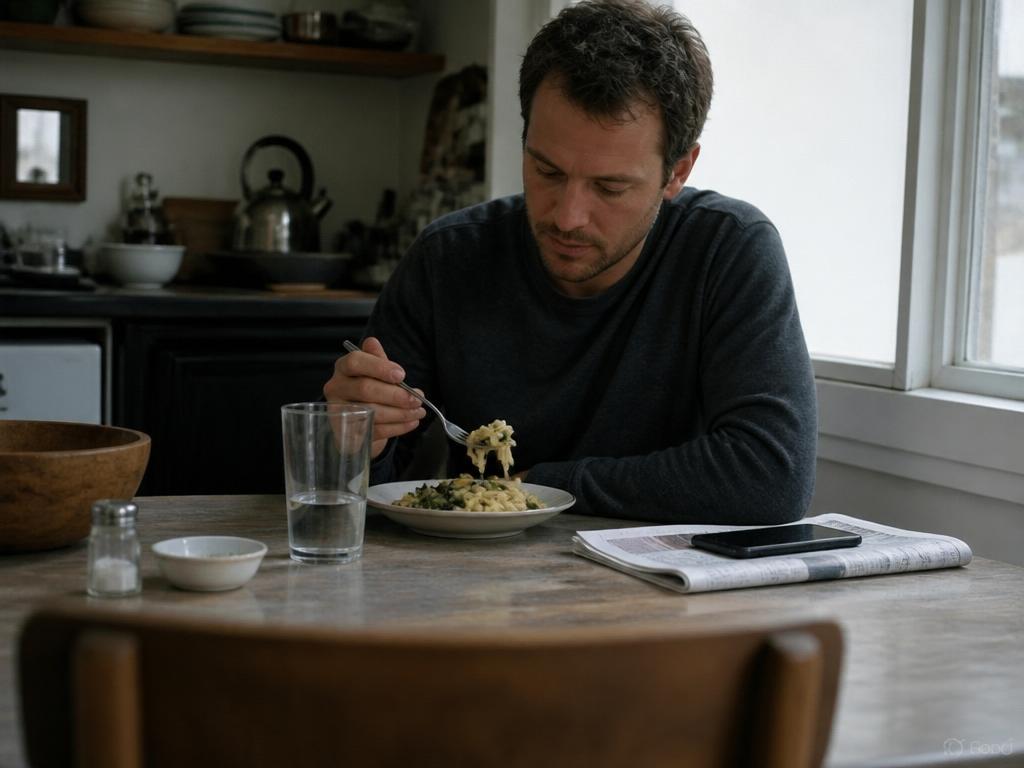
Mindful eating can sound like it requires a serene hour and a candle. On a busy day, that’s laughable. The good news is that eating more mindfully is really about small shifts in attention — and those fit even into a rushed, ordinary lunch.
Slowing down the first bites
When we’re busy, we tend to eat fast — barely tasting, half thinking about the next thing. Mindful eating doesn’t demand that you slow your whole meal to a crawl. A gentler, more realistic starting point is simply to slow down the first few bites and actually pay attention to them.
Those opening bites are where it’s easiest to be present, and a little awareness there tends to set a calmer tone for the rest of the meal. Instead of inhaling your food on autopilot, you pause just long enough to notice it — the taste, the texture, the warmth, the smell. It’s a small act, but it pulls you into the experience of eating rather than rushing past it.
Some gentle ways to slow the first bites:
- Take a breath before you start. A single slow breath before the first bite signals a shift from doing to eating.
- Notice the food. For the first mouthful or two, pay real attention to how it tastes and feels.
- Put the utensil down between early bites. A small pause stops the automatic shovel-and-repeat rhythm.
- Chew a little more than usual. Slowing the mechanics of eating naturally slows the pace.
You don’t have to sustain this for the entire meal for it to help. Even a mindful start tends to make eating feel less frantic and more satisfying.
Noticing fullness cues
Eating quickly and distractedly has a quiet side effect: it’s easy to miss the body’s signals that you’ve had enough. Fullness isn’t instant — it takes a little time to register — so when we race through a meal, we can blow right past the point of comfortable satisfaction without noticing.
Mindful eating helps simply by giving those cues a chance to be heard. When you slow down even a little and pay attention, you’re more likely to notice the gentle shift from hungry to satisfied, and to stop around the point that feels good rather than uncomfortably stuffed. This isn’t about restriction or rules; it’s about tuning back in to what your body is telling you.
A few gentle pointers:
- Pause partway through. A brief check-in midway through a meal lets you notice how full you’re getting.
- Aim for comfortable, not stuffed. The goal is satisfied and content, not pushing on until everything’s gone out of habit.
- Give fullness time to register. Because the signal lags, eating a touch more slowly helps it catch up before you overshoot.
- Let go of “clean the plate.” Stopping when you’re satisfied is a kindness, not a waste of willpower.
| Eating on autopilot | Eating with a little attention |
|---|---|
| Racing past fullness signals | Noticing when you’re satisfied |
| Finishing out of habit | Stopping when it feels right |
Over time, this gentle attentiveness helps meals feel more in tune with what your body actually wants.
Eating away from screens
Perhaps the single most powerful mindful-eating tweak on a busy day is also the simplest: eat away from screens. So many meals happen in front of a phone, a laptop, or a television, and that distraction is the enemy of presence. When your attention is on a screen, you barely register the food at all.
Eating while distracted tends to mean eating faster, enjoying it less, and missing both the taste and your fullness cues. Stepping away from screens — even just for one meal a day — instantly makes eating more mindful, without requiring any special technique. You simply give the meal your attention because there’s nothing competing for it.
Some gentle, realistic ways to do this:
- Pick one screen-free meal. You don’t have to overhaul every meal. Choose one to eat without devices and start there.
- Make a small ritual of it. Sit down properly, put the phone aside, and let eating be the thing you’re doing, not a background activity.
- Use it as a break. Reframe a screen-free meal as a genuine pause in your day — a chance to step back from work and screens entirely.
- Eat with others when you can. Sharing a meal, phones away, blends mindful eating with connection.
This isn’t about perfection or doing it at every meal. On the busiest days, even bringing a little more presence to a single meal makes a difference — to how satisfying it feels, and to how it lands as a small, restorative pause.
The bottom line
Mindful eating on a busy day isn’t a serene ceremony — it’s a few small shifts in attention. Slow down the first bites, check in with your fullness instead of racing past it, and eat at least one meal away from screens. None of it requires extra time you don’t have. Bring a little presence to even one meal a day, and eating becomes more satisfying and a touch more restful.